SEO Malaysia: A Practical Starting Guide for Small Businesses

SEO gets a mixed reputation among Malaysian SMEs — some have paid for a "package" that produced monthly reports full of backlinks and rankings for terms nobody actually searches, with no real increase in enquiries. That's a legitimate complaint about how SEO is often sold, not a reason SEO doesn't work. This guide covers what SEO actually involves and how to tell if it's being done properly.
What SEO actually is, in plain terms
Search engine optimisation is the work of making your website easier for Google (and increasingly, AI answer engines) to find, understand, and recommend for searches relevant to your business — without paying for ad placement. It has three main components that need to work together: technical SEO (can search engines actually crawl and load your site well), content (does your site actually answer what people are searching for), and local SEO (does your business show up for "near me" and city-specific searches).
Technical SEO: the foundation
Content and backlinks won't help a site that loads slowly, has broken internal links, or isn't structured in a way search engines can parse. Before any content work, a proper SEO process starts with:
- Site speed — Core Web Vitals scores affect both rankings and whether visitors stay long enough to convert.
- Crawlability — making sure a clean sitemap and robots.txt exist, and nothing important is accidentally blocked from indexing.
- URL structure — clean, descriptive URLs rather than parameter strings.
- Mobile usability — the majority of Malaysian searches happen on mobile devices.
Content built around real search intent
Ranking for a keyword nobody actually searches is worthless. Effective SEO content starts from real search behaviour — what people actually type into Google when they need your service — and builds pages that directly answer that, rather than stuffing a page with keyword variations. A page titled around "how much does X cost in Malaysia" earns traffic because that's genuinely what people search before buying; a page vaguely about "quality services in Malaysia" doesn't match anything real people type.
Local SEO: often the highest-value piece for SMEs
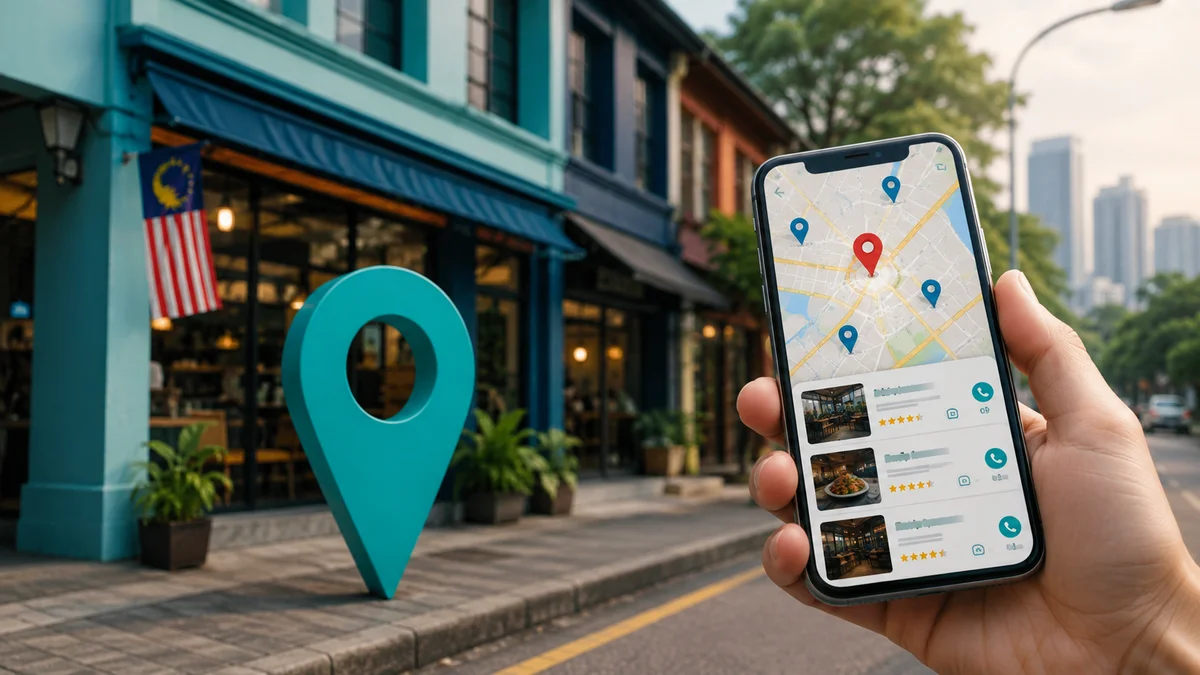
For a business serving a local or regional market, showing up in the Google Maps "map pack" for searches like "[service] near me" or "[service] Kuala Lumpur" is often more valuable than ranking for a broad national term. This depends heavily on:
- A fully completed, regularly updated Google Business Profile
- Consistent business name, address and phone number (NAP) across your website and any directory listings
- Genuine customer reviews (never fabricated ones — Google actively penalises this)
- Location-relevant content on your website, when it's genuinely useful, not stuffed in artificially
How long SEO actually takes
Anyone promising results in two weeks is either overselling or working in an extremely low-competition niche. A realistic timeline for meaningful ranking movement is 3–6 months, depending on your industry's competitiveness and how much work your site's technical foundation needs first. SEO compounds — the sixth month is usually more productive than the first, because the technical and content foundation from earlier months is now working together.
What a legitimate monthly report should include
Be wary of a report that only shows backlinks acquired or a generic "SEO score." A useful monthly report shows:
- Keyword ranking changes for terms that actually relate to enquiries, not vanity keywords
- Organic traffic trends over time, ideally segmented by which pages are gaining or losing traffic
- What was actually worked on that month, in plain language
- What's planned next, and why
Common SEO mistakes Malaysian SMEs make
- Rebuilding the website without redirecting old URLs, losing existing rankings overnight.
- Keyword stuffing — repeating a phrase unnaturally, which reads badly to visitors and is actively penalised by modern search algorithms.
- Ignoring Google Business Profile entirely while focusing only on the website.
- Buying backlinks from low-quality sites, which can do more harm than good.
- Expecting SEO to replace paid ads immediately, rather than running both while SEO builds up over months.
SEO vs Google Ads: not an either/or
SEO builds organic visibility that keeps working without ongoing ad spend, but takes months to build. Google Ads gets you in front of searchers immediately, but visibility stops the moment you stop paying. Many Malaysian SMEs run both simultaneously — ads for immediate visibility while SEO builds up in the background — rather than treating them as competing choices.
How to evaluate an SEO provider
Ask specifically: what technical audit will you run first? How will you choose which keywords to target, and why those? What does the monthly report actually show? A provider who can answer these concretely, rather than repeating "we'll get you to page one," is more likely to actually understand your specific market.
Where to go from here
If your website currently gets little to no traffic from Google search, or you've tried SEO before without seeing real enquiry growth, the right starting point is usually a technical and content audit of what you already have. See our SEO page for package pricing and what's included at each tier.
ZAMAN IT Team
Web & Software Development, Kuala Lumpur
Written by the ZAMAN IT team, drawing on client work across websites, AI chatbots, business software and digital marketing since 2008.
Related services
Practical guidance, Malaysia-specific
Real pricing, real trade-offs, written for people running a business here.